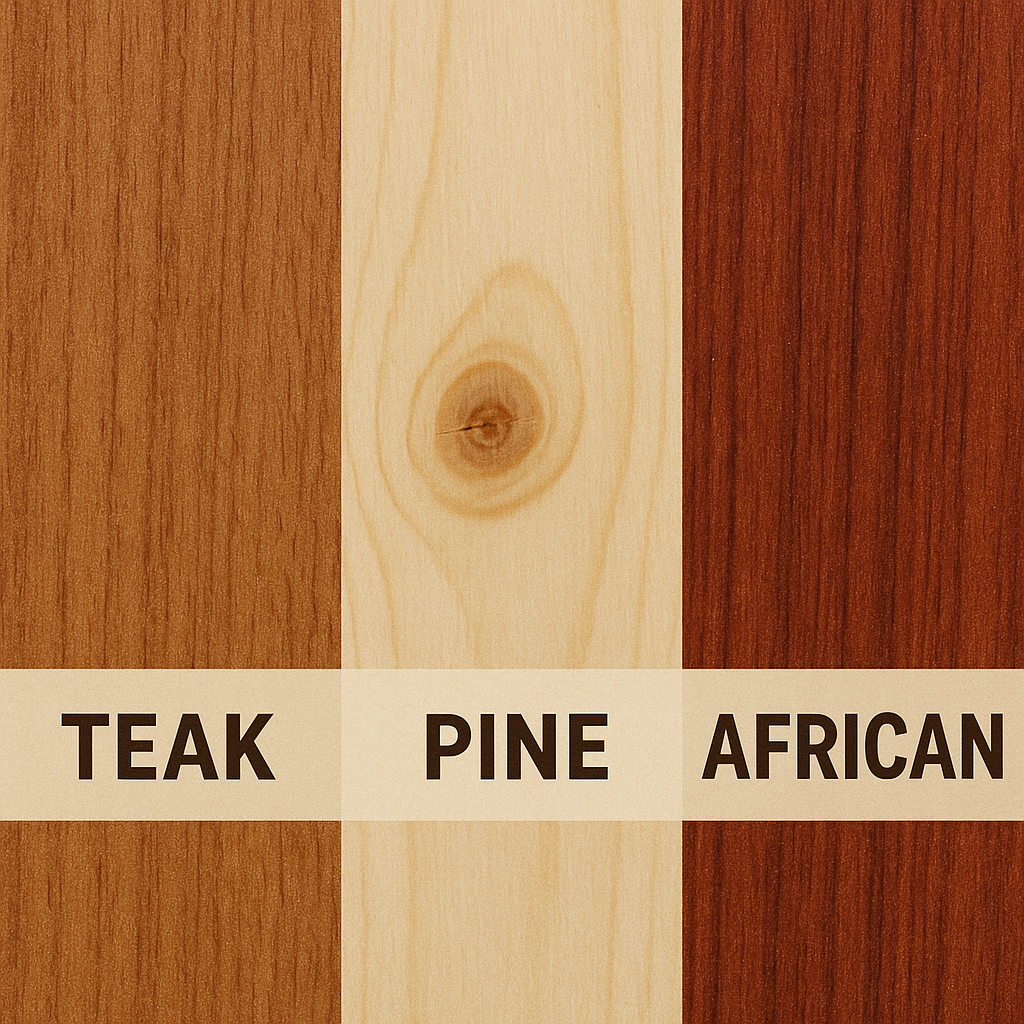
Pine vs Maple vs Teak for Sports Flooring: Which Wood is Best for Indian Courts?
Walk into any serious indoor sports facility in India and you will find wooden flooring. Wood remains the gold standard for badminton, basketball, and indoor multi-sport courts because no synthetic surface replicates its combination of shock absorption, ball bounce consistency, and playing feel.
But not all wood is equal — and choosing the wrong species for your court is an expensive mistake.
Here is a detailed comparison of the three most commonly used woods for sports flooring in India: pine, maple, and teak.
Quick Comparison
Factor | Pine | Maple | Teak |
Hardness (Janka) | 870 lbf | 1,450 lbf | 1,070 lbf |
Shock absorption | Good | Excellent | Moderate |
Ball bounce consistency | Moderate | Excellent | Good |
Moisture resistance | Low | Moderate | Excellent |
Durability | Moderate | High | Very High |
Maintenance | High | Moderate | Low |
Cost (India) | Lowest | Highest | Moderate |
International standard compliance | Limited | BWF / FIBA / ITF | Limited |
Best for | Budget recreational courts | Competitive sports courts | High-humidity environments |
Pine: The Budget Option
Pine is a softwood — the least hard of the three options and not typically specified for serious sports courts anywhere in the world.
Advantages
Lowest cost — pine is the most affordable timber for sports flooring in India
Easy to source — widely available across IndiaDisadvantages
Too soft for sports use: Pine dents easily under repeated foot traffic and equipment movement. High-heeled shoes, court shoes with aggressive grip, and ball impact all leave marks within months of installation
Poor shock absorption engineering: Pine's natural softness doesn't translate to controlled shock absorption — it compresses unevenly
High moisture sensitivity: Pine swells, warps, and develops gaps quickly in India's humid environments
Short lifespan: A pine sports floor typically needs major remedial work within 5-7 years — often sooner in coastal or humid locations
Not BWF or FIBA compliant: No serious sports governing body certifies pine as an acceptable court surfaceVerdict
Pine is sometimes used in very low-budget recreational halls where cost is the only criterion. It is not recommended for any facility that will see regular sports use. The false economy of lower upfront cost is cancelled out by high maintenance costs and early replacement.
Maple: The International Standard
North American hard maple is the wood against which all other sports flooring is measured. It is the specified surface for Olympic badminton, NBA basketball, and elite tennis — for good reason.
Advantages
Optimal hardness for sports: At 1,450 lbf on the Janka hardness scale, maple is hard enough to resist denting under sports use but not so hard that it loses shock absorption
Exceptional consistency: Maple's tight, uniform grain produces consistent ball bounce across the entire court surface — critical for competitive play
Superior shock absorption: Properly engineered maple flooring systems (using a floating sub-floor with resilient pads) absorb up to 53% of impact force — reducing player fatigue and injury risk
BWF and FIBA compliance: North American maple is the specified surface for BWF-standard badminton courts and FIBA-standard basketball courts
Long lifespan: A well-maintained maple floor lasts 20-25 years and can be sanded and refinished multiple times
Aesthetics: Maple's light, consistent colour and tight grain produce the premium court appearance associated with elite facilitiesDisadvantages
Highest cost: North American maple is imported and commands a significant price premium over domestic alternatives
Moisture sensitivity: Maple requires stable humidity conditions — typically 45-65% relative humidity. Facilities in coastal cities without proper HVAC may experience seasonal movement
Requires professional installation: Sub-floor engineering and acclimatisation protocols are essentialVerdict
Maple is the correct choice for any sports facility where performance, longevity, and standard compliance matter. Schools, academies, clubs, and institutions serious about their courts should specify maple.
Teak: The Indian Alternative
Indian teak (Tectona grandis) and African teak are both used for sports flooring in India as a mid-point between pine's low cost and maple's premium price.
Advantages
Excellent moisture resistance: Teak's natural oil content makes it significantly more resistant to humidity, moisture, and seasonal movement than maple or pine. This is its primary advantage in Indian conditions
High durability: Teak is harder than pine and resists denting and wear well under regular sports use
Lower maintenance: Teak's natural oils reduce the frequency of refinishing required compared to maple
Better local availability: Indian teak can be sourced domestically, reducing cost compared to imported maple
Good for high-humidity locations: Coastal cities, covered outdoor courts, and facilities without full HVAC benefit significantly from teak's moisture resistanceDisadvantages
Not BWF or FIBA compliant: Teak is not recognised as a compliant surface for international or national-level competition
Ball bounce inconsistency: Teak's grain is less uniform than maple, producing slightly less consistent ball bounce — noticeable at competitive level but acceptable for recreational play
Heavier than maple: More challenging to work with and install
Higher cost than pine: Teak costs more than pine, though significantly less than North American mapleVerdict
Teak is the most sensible choice for recreational and club-level facilities in humid or coastal Indian environments where moisture resistance is the primary concern and competition-standard compliance is not required.
Which Wood Should You Choose?
Choose North American Maple if:
You are building a badminton court that will host competitive or academy-level play
You want BWF or FIBA compliant certification
Your facility has HVAC that maintains stable humidity
You are investing in a 20+ year facilityChoose Indian or African Teak if:
Your facility is in a coastal or high-humidity city (Mumbai, Chennai, Kolkata, Goa)
The court is for recreational or club play — competition compliance is not required
You want a long-lasting floor with lower maintenance requirements
Budget sits between pine and mapleAvoid Pine if:
The court will see regular sports use
You want the floor to last more than 5-7 years without major remedial work
You are building for any level of badminton, basketball, or multi-sport use
What CapsInfra Recommends
For most Indian sports facilities, we recommend:
North American or Canadian maple for academies, schools, and any facility hosting competitive play
Indian or African teak for recreational halls, housing society indoor courts, and coastal locations
Avoid pine for sports use — we do not install pine sports floorsEvery wooden floor installation by CapsInfra includes a floating sub-floor system with resilient pads for shock absorption, moisture barrier, proper acclimatisation protocol, and a written warranty.
[Get a free site assessment and flooring recommendation →](/contact)